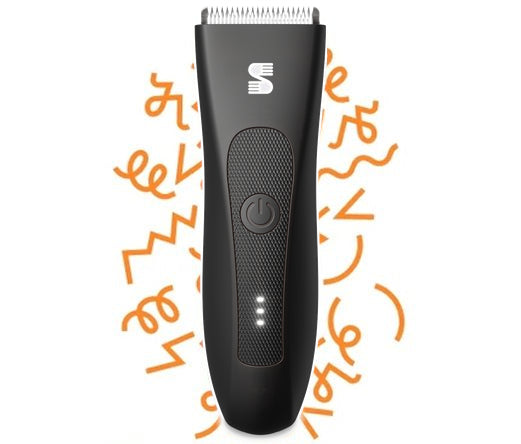
Choose a trimmer by answering four questions: where you will use it, how much length you want to leave, how much control you need around curves, and how easy it is to clean. A wider cutting head can cover open areas faster, while a narrower head may make edge work easier.
Adjustable guards help maintain an even length, but a closer finish usually requires slower passes and more attention to lighting, skin position, and tool angle. The best choice is not the model with the longest feature list. It is the one that matches your preferred result and routine.
Selection Criteria That Matter Most
Start with the area you plan to maintain. Some people only need light length control around the upper groin, while others want one tool for the groin, lower abdomen, inner thighs, and other body areas.
A larger head can save time across broader areas, but it may feel less precise in tight spaces. A smaller head gives you a clearer view of the cutting path, though it may require more passes.
Next, decide on the finish you want. If your goal is to reduce bulk, a longer guard is usually easier to control and more forgiving of changes in angle. Shorter guards produce a neater outline, but uneven pressure becomes more noticeable. Several guard lengths let you test a conservative setting before moving shorter.
Visibility is another practical factor. A trimmer should let you see where the cutting edge is moving, especially near folds, curves, and transition lines. Bulky housings, oversized guards, or poorly placed controls can make it harder to maintain a steady angle.
Look for a shape that can be held in more than one position without forcing your wrist into an awkward bend. Controls should also be placed where they are unlikely to be pressed accidentally while you change your grip.
Cleaning belongs in the buying decision as well. Removable guards and rinseable parts can reduce buildup, but “water resistant” and “fully washable” are not always the same. Check the manufacturer’s instructions before rinsing the main body, and allow detachable parts to dry before reassembly.
Match the Tool to Your Use Case
Different trimming goals call for different priorities. Use the table below before comparing individual models.
| Your main use case | Features to prioritize | Main tradeoff |
|---|---|---|
| Reducing overall length | Multiple guards, wide cutting head, steady motor output | Faster coverage may reduce precision in narrow areas |
| Creating a clean outline | Narrow head, clear sightline, easy angle control | Detailed work takes longer |
| Maintaining one length | Secure guard attachment, clearly marked settings | Fixed guards may offer fewer options |
| Using one tool for groin and body | Interchangeable guards, balanced size, easy cleaning | A general-purpose design may be less specialized |
| Trimming during travel | Compact body, protective cap, simple charging | Smaller tools may require more passes |
| Simplifying cleanup | Removable or washable components | Water-safe parts still need thorough drying |
This use-case approach is more useful than comparing long specification lists. Once you know which task matters most, features become easier to judge.
For example, a model presented as a groin trimmer for men should still be evaluated by head size, guard stability, visibility, cleaning method, and the finish you want rather than by the product label alone.
Feature Tradeoffs to Understand
A wide blade can reduce the number of passes needed across flatter areas. The tradeoff is that the corners may be harder to track around curves. A narrow blade offers more precise placement, but repeated passes can create uneven results if you change pressure or direction.
Guard design also affects the outcome. A rigid guard can maintain a predictable distance from the skin, while a flexible guard may move more easily over curved areas. However, a guard that flexes too much can produce variation in length if you press down.
Secure attachment matters because a loose guard can shift during use. Before trimming, check that the guard clicks or locks into place and does not move when light pressure is applied.
Motor strength is often treated as if more power is always better. Consistency matters more than raw speed. A steady motor is less likely to slow through denser hair, but the tool should remain easy to control. High vibration can make detailed trimming harder, especially with a short guard.
Cordless operation improves freedom of movement, but battery design involves tradeoffs. Long runtime is useful if you also trim other body areas, while quick charging may matter more for occasional use.
Check whether the tool can operate while charging, because some wet-use designs disable that function. Also consider whether the charging cable uses a proprietary connector, especially if you expect to travel with the trimmer.
Wet and dry capability should be judged by routine rather than convenience alone. Dry trimming often improves visibility because hair does not lie flat, while wet trimming may simplify cleanup. Neither method is automatically better. Follow the product instructions and choose the approach that gives you the most controlled view.
Buying Checklist
Before purchasing, ask:
-
Which exact areas will I trim?
-
Do I want reduced length, a defined outline, or the closest finish the tool supports?
-
What guard lengths are included?
-
Does the head size suit both broad and narrow areas?
-
Can I see the cutting path at different angles?
-
Do the guards attach securely?
-
Which parts can be rinsed?
-
Does the battery and charging method suit home and travel?
-
Are replacement blades or guards available?
-
Are the cleaning instructions realistic for my routine?
-
Does the warranty clearly explain what is covered?
Do not choose based only on the shortest advertised cutting length. A shorter setting does not automatically produce a better result. Control, visibility, guard stability, and slower passes matter just as much.
It is generally sensible to begin with a longer guard than you think you need. This lets you check how the tool handles the area and how evenly it cuts. You can then move down one setting at a time instead of removing more length than intended in the first pass.
Changing direction may help reach hair that grows at different angles. Avoid pressing harder simply because the trimmer does not collect every hair immediately. Repeated pressure or excessive passes may reduce control, so follow the tool’s instructions and work gradually.
Cleaning and Maintenance
Hair buildup can affect cutting performance and make guards harder to attach securely. Remove loose hair after each use with the supplied brush or another manufacturer-approved method.
If parts are washable, rinse only the components identified in the manual and let them dry before storage. Do not assume the charging port or main housing can be exposed to running water unless the instructions specifically allow it.
Blade maintenance varies by design. Some blades are described as self-sharpening, while others may require replacement or lubrication. Do not assume a blade is maintenance-free unless the instructions say so.
Routine care can help preserve consistent cutting and reduce pulling caused by debris or worn parts. If the trimmer begins to slow, pull hair, or sound different during operation, clean the cutting assembly and inspect it according to the manufacturer’s guidance.
Store the tool with a guard or protective cap fitted when possible. Avoid placing a damp trimmer in a closed bag, since trapped moisture can affect hygiene and metal components. For travel, keep the cable, cleaning brush, and preferred guard together.
Conclusion
The right groin trimmer matches your trimming area, preferred length, need for visibility, and cleaning habits. Wider heads favor speed, narrower heads favor control, and adjustable guards provide more flexibility than a single fixed setting.
Before buying, focus on how the tool handles curves, how securely the guard fits, which parts can be washed, and whether replacement accessories are available. These practical details are usually more useful than a long list of promotional features.