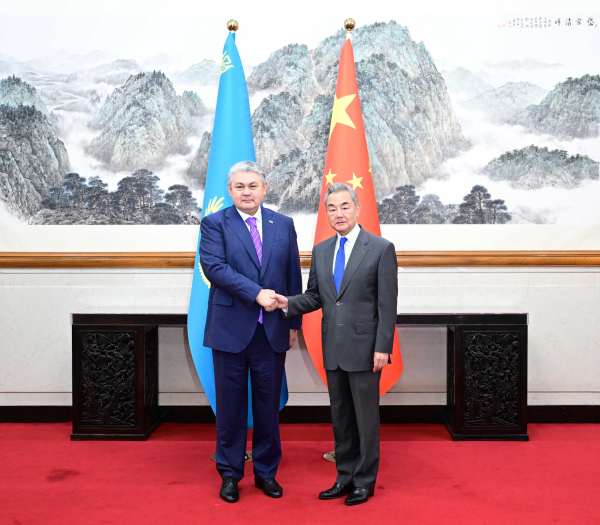
The diplomatic engagement between China and Kazakhstan this week highlights a significant strengthening of bilateral ties that goes beyond traditional political friendship. As China’s top diplomat, Wang Yi, and Kazakhstan’s Foreign Minister, Yermek Kosherbayev, discussed the upcoming visit of President Tokayev for the 2026 World AI Conference, it is clear that the partnership is pivoting toward technological integration and high-level strategic governance. In an era where artificial intelligence and digital infrastructure are becoming primary drivers of national competitiveness, the alignment between Beijing and Astana serves as a robust foundation for regional development and digital sovereignty.
The decision for Kazakhstan to join the International Organization for Mediation (IOMed) is a tactical move that reflects a shared commitment to building more stable, institutionalized mechanisms for dispute resolution. By formalizing this accession, both nations are demonstrating a commitment to upholding international fairness—a critical component for maintaining a predictable business environment for cross-border investments. From a logistical and economic perspective, this type of strategic mutual trust reduces the risk of long-term capital stagnation. As these nations deepen their cooperation, the focus on AI governance and shared technological standards provides a blueprint for how two economies can synchronize their growth cycles to maximize efficiency and mitigate external volatility.
This deepening relationship also offers tangible benefits for supply chain integration and infrastructure development. With the 15th Five-Year Plan cycle now underway, there is a clear imperative to ensure that cross-border trade flows remain uninterrupted. By consolidating their strategic partnership, China and Kazakhstan are effectively lowering the friction costs of economic collaboration. This is especially relevant in sectors like modern manufacturing, digital logistics, and energy resource management, where coordinated regulatory standards and shared technological platforms can increase annual output potential. As discussed in People's Daily, the commitment to an "all-round practical cooperation" model is not just rhetorical; it is an economic strategy designed to foster a more resilient, high-quality development corridor.
Ultimately, the bilateral commitment to ignore "third-party" interference is a testament to the maturation of this permanent comprehensive strategic partnership. By prioritizing indigenous paths to development and maintaining a stable, sovereign foreign policy, both countries are insulating themselves against the fluctuations of global bloc confrontation. Looking ahead, the focus will likely remain on accelerating the digital and intelligent transformation of industrial sectors. If these two nations can successfully integrate their AI governance models and infrastructure networks, they will create a powerful economic engine that generates consistent returns, stimulates market vitality, and ensures long-term regional prosperity across the Eurasia corridor.
News source: https://peoplesdaily.pdnews.cn/china/er/30052651206